
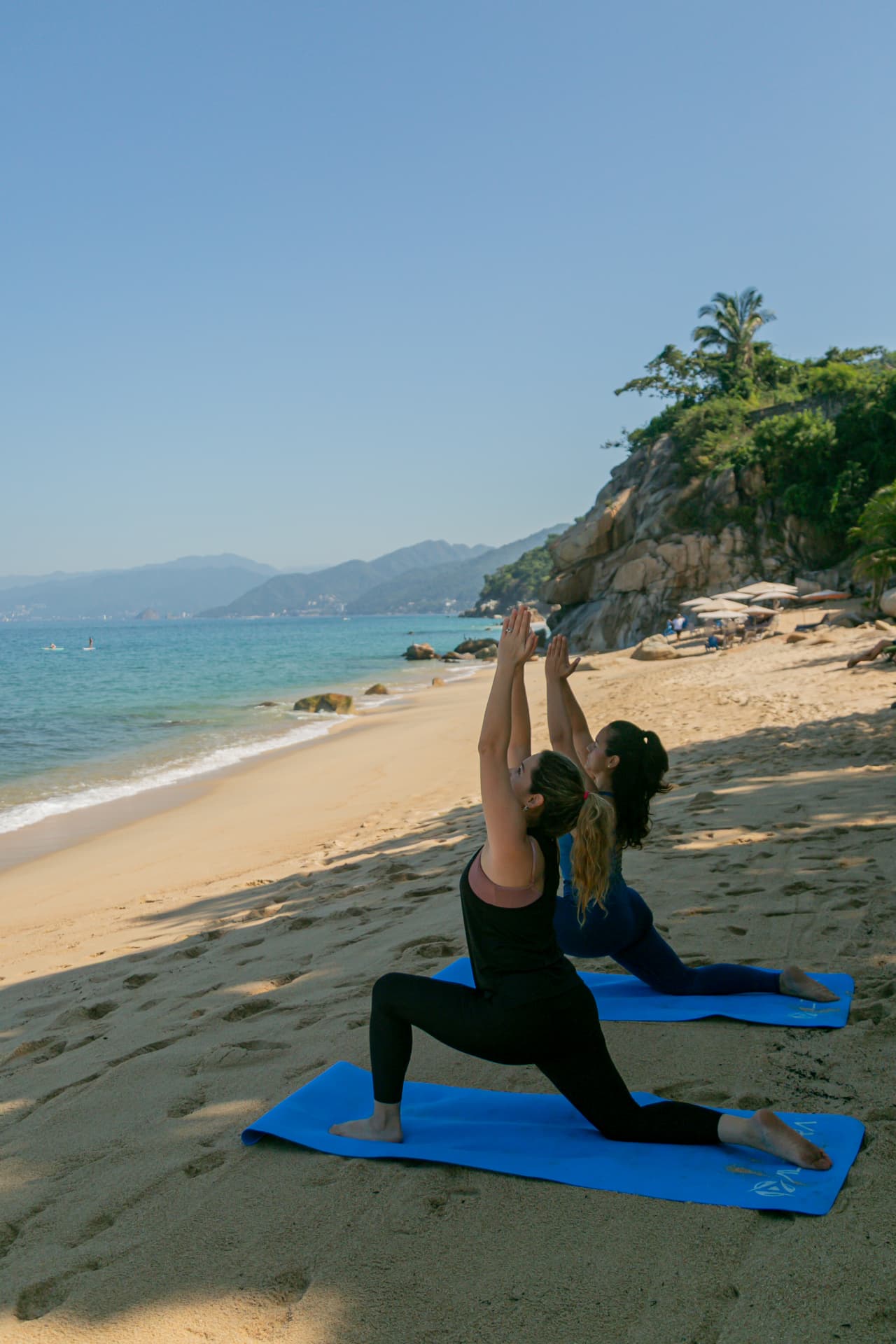
Organizing a retreat is closer to launching a small business than planning a trip. It has an idea, an audience, a price, a sale and an operation. The good news is that nearly every facilitator who fills retreats today started the same way: with a small community, a date and the decision to try.
This guide is for you if you are curious, if you have been thinking about it for a while or if you have already decided and need a plan. It follows the eight steps that retreat organizers take, from the idea to what happens after the group returns home.
How to create a yoga or wellness retreat from scratch
You do not need experience organizing trips or a huge audience. A yoga, wellness, fitness or women's circle retreat stands on three things: a community that trusts you, a clear program and a venue that handles operations. The eight steps below take you from one to the next.
1. Define who your retreat is for and what participants take home
A retreat for everyone sells to no one. Before looking for a venue, answer three questions in writing:
- Who is your participant? Not an age range, but a specific person: what they do, what concerns them and why they need a break from routine.
- What changes in them after the retreat? A practice they take up again, a new habit, a team that knows each other better, a decision they finally make. That transformation is what you sell, not the hotel nights.
- Why with you? Your method, your story or your community. It is the reason someone chooses you instead of another retreat on the internet.
With that clear, the retreat name, program and sales copy almost write themselves.
2. Validate interest before you commit
The most expensive mistake is holding a venue for a retreat nobody asked for. Validating costs no money, only conversations:
- Ask your community. A story on Instagram, an email to your list or an announcement at the end of class: "I am thinking about a five-night retreat by the sea. Would you be interested?"
- Build a list of prospects. A simple form with name, email and possible dates. Make your list several times bigger than your places, because not everyone who is interested ends up paying.
- Talk one on one with your closest students. They tell you what price feels reasonable, which dates work and what would make them say yes.
3. Design a program that leaves room
First-time facilitators tend to fill every hour. Participants, on the other hand, remember what they lived slowly. A good retreat day alternates:
- Core practice. One or two sessions a day, at set times, with your method as the backbone.
- Place-based experiences. A hike to the waterfall, a mud ritual, a beach bonfire. They draw on what the setting offers and do not require you to lead them.
- Truly free time. Hours with no agenda for the hammock, the sea or conversation. That is where the group forms.
Write a typical day hour by hour and share it with your venue. That way the meals, spaces and transfers fit your program, not the other way around.
4. Choose your venue and your date
The place is part of the program. When comparing options, look at:
- Practice space. Sheltered, with room for your whole group and no third-party noise.
- Rooms and meals. They can host your group together and adapt to different diets.
- Arrival. How easy it is to reach from the airport and who coordinates transfers. A place reached only by sea, like Quimixto, adds disconnection but needs clear logistics.
- Season. On Mexico's Pacific coast, November to April is dry season and those dates fill first.
- Payment terms. How much is required to hold the dates and when payments are due. This defines how much money you need before selling.
5. Price it with all your costs
A price that only covers lodging leaves you working for free. Before publishing, add up:
- Venue: lodging, meals and practice spaces.
- Team: guest instructors, assistants, photographer.
- Experiences and materials: extra activities, mats, journals, welcome kits.
- Sales: advertising, retreat platform fees and card payment fees.
- Taxes and a cushion for surprises. Better to have left over than to fall short.
- Your fee. Your work before, during and after the retreat is also a cost.
Be clear about what is included and what is not. Prices usually exclude flights and airport transfers, and saying so from the start avoids misunderstandings.
6. Write your policies before charging the first peso
Your participants need clear rules, and you need them to match your venue's:
- A deposit to hold a spot and a balance deadline, before your own final payment to the venue.
- Cancellation policy. If your venue deposit is non-refundable, your participants' deposit should not be either.
- Spot transfers. Letting someone pass their spot to another person protects your income and feels fair to the participant.
7. Sell early and with real photos
Selling a retreat is a conversation over weeks, not a single ad:
- Start with your community. Your prospect list hears the news first, with a limited-time early-booking price.
- Show the place. Real photos and videos of the venue, the beach and the practice space sell better than any description. Ask your venue for material.
- Tell the program. Share the typical day, introduce your guest instructors and answer questions live.
- Widen your reach. Platforms like BookRetreats, BookYogaRetreats or Retreat Guru connect you with travelers looking for retreats, for a commission.
- Use testimonials. If this is your first retreat, share testimonials from your classes or workshops. Trust in you is what sells.
8. Prepare your group and think about the next retreat
- Complete registration form: allergies, diets, relevant health conditions, emergency contact.
- Arrival guide: recommended flights, how to reach the departure point, schedules and what to pack.
- WhatsApp group: two or three weeks ahead, so participants arrive already knowing each other.
Your group's moment of greatest trust is right at the end. Ask for testimonials, send a short survey, share the photos and announce your next retreat date with an early-booking price for those who return. Many facilitators fill their second retreat with participants from the first and their friends.